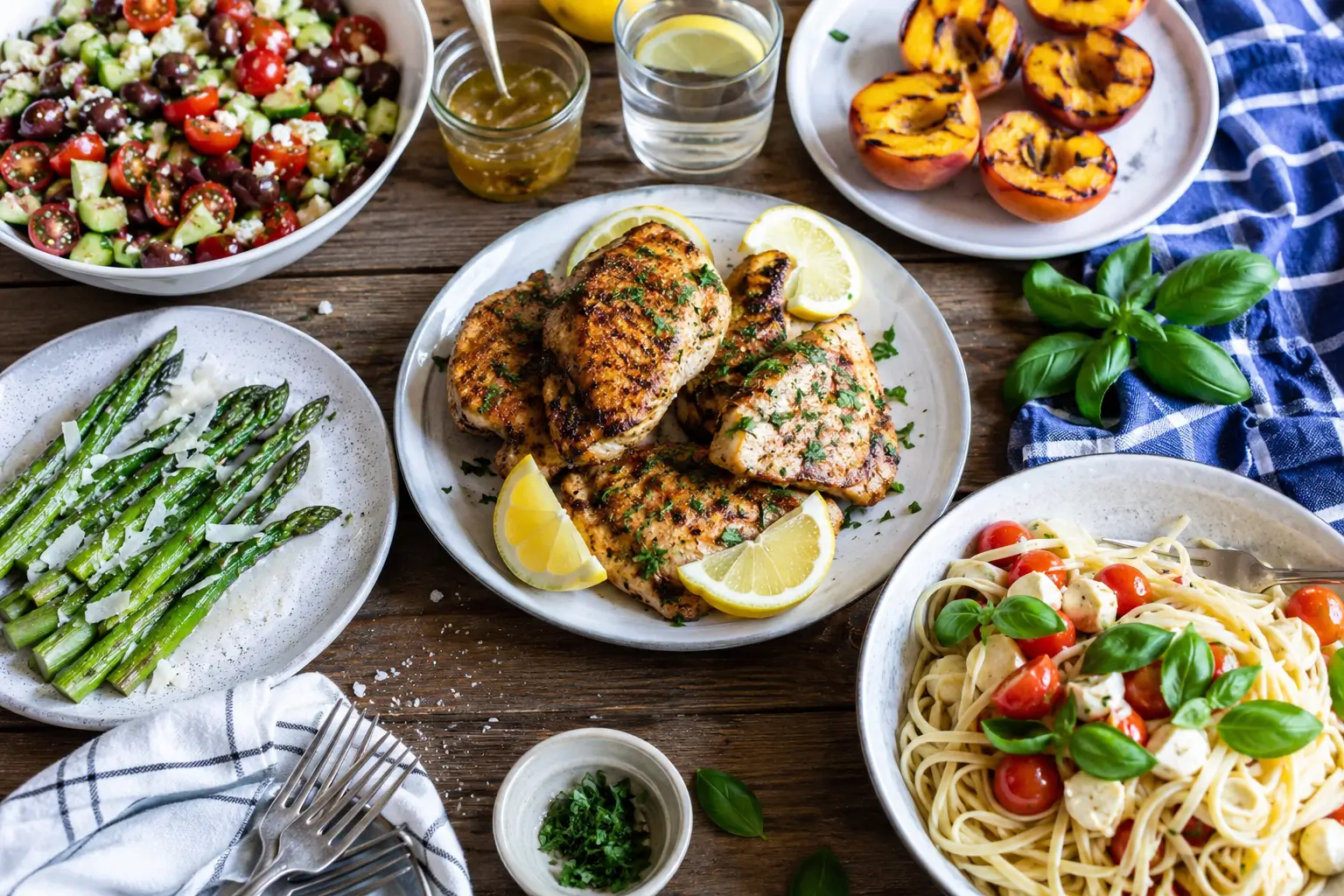
Be honest — how many times have you stared into the fridge at 6 PM on a hot Tuesday, drenched in the day’s heat, and thought: there is no way I’m turning on the oven for an hour? It happens to everyone. And the default answer — takeout, cereal, whatever requires zero effort — usually leaves you feeling worse than the hunger did.
Here’s what nobody tells you: healthy summer dinners don’t require an hour, a culinary degree, or some Pinterest-level mise en place. As someone who has spent years helping home cooks ditch the “healthy but boring” trap, I can tell you that summer is actually the easiest season to eat well. The ingredients are at their best, the cooking times are short, and the combinations basically write themselves.
In this guide you’ll get ten genuinely satisfying, light dishes — plus the protein tips, marinade hacks, flavor variations, and real-world answers to the questions people always have but rarely ask out loud.
Why This Approach to Healthy Summer Dinners Works
Plenty of “healthy” recipes are either flavorless or secretly a full-time job. These are neither. Here’s what makes them different:
- Affordable proteins and produce that are easy to find — nothing exotic, nothing that requires a specialty store trip mid-week
- Marinades that work in 15 minutes — you get deep, layered flavor without the overnight wait
- Flexible enough for a Tuesday or a backyard gathering — the same base recipe scales up and dresses up without extra effort
The real trick is using summer’s natural advantages: peak-season vegetables that taste great raw or barely cooked, lean proteins that cook fast over high heat, and fresh herbs that do the heavy lifting on flavor so you don’t need much else.
Choosing the Right Proteins and Produce
This is where most people quietly go wrong. The ingredient choice determines whether dinner takes 15 minutes or 45.
Best Proteins for These Recipes
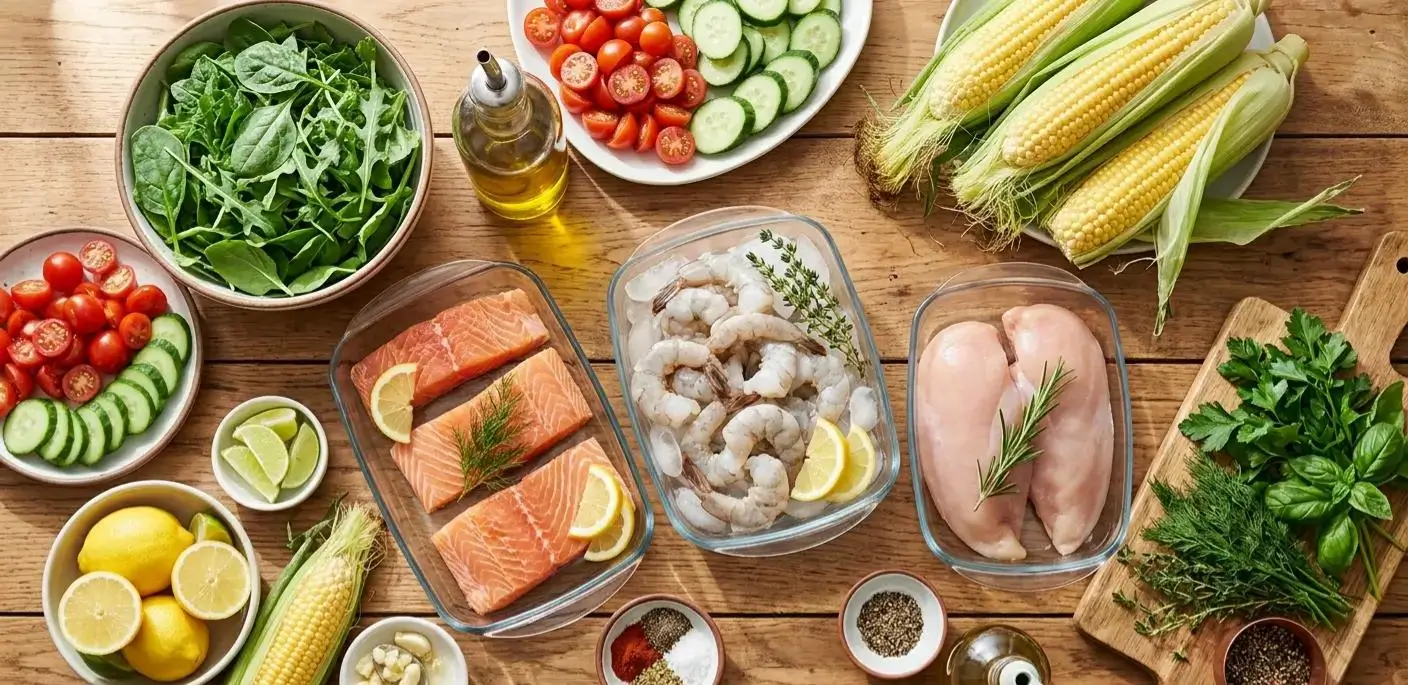
Chicken thighs beat chicken breasts every time in summer cooking. They stay juicy under high heat where breasts dry out and get rubbery. Shrimp is your fastest option — three to five minutes and it’s done. Salmon works beautifully at high heat, develops a great crust, and pairs with almost every flavor profile on this list. For plant-based nights, firm tofu and canned chickpeas both absorb marinades well and hold their shape under heat.
Buying Tips
For chicken, look for even color with no gray patches near the bone — that’s a freshness tell. Shrimp should be translucent and smell like the ocean, not fishy. When picking produce, firmness is your friend: a zucchini that feels spongy or a tomato with soft spots near the stem will fall apart before it finishes cooking. Farmers’ markets in summer are genuinely worth the detour — the tomatoes alone make it worthwhile.
Marinades and Dressings
A great marinade does two things: tenderizes and adds flavor. For lean proteins, a simple formula works every time — acid (lemon juice or red wine vinegar), fat (olive oil), aromatics (garlic, shallot), and fresh herbs. Let proteins sit for at least 15 minutes; overnight intensifies the flavor dramatically. For vegetables, a toss in olive oil, salt, pepper, and a squeeze of lemon right before cooking is all they need.
Quick go-to marinade: 3 tablespoons olive oil, 2 tablespoons lemon juice, 2 minced garlic cloves, 1 teaspoon dried oregano. Ready in two minutes.
Smart Substitutions
Swap chicken thighs for salmon in any of these recipes and the cook time barely changes. Use white beans instead of chickpeas for a creamier texture. Yellow squash and zucchini are fully interchangeable. If you can’t find fresh herbs, a decent dried alternative works — just use half the amount.
Ingredients and Prep
Protein Prep Essentials
Pat everything dry before it hits heat. Moisture on the surface of protein steams it instead of searing it, and you lose that caramelized crust that carries most of the flavor. For chicken thighs, score the surface once or twice with a knife — it helps the marinade penetrate faster. For shrimp, devein and peel before marinating so the flavor actually gets in.
Marinades That Deliver
The formula is simple: acid + fat + aromatics + herbs. Lemon juice or red wine vinegar as your acid, olive oil as your fat, garlic and shallot as your aromatics, and whatever fresh herb you have. Fifteen minutes gets you solid flavor. Two hours gets you great flavor. Overnight gets you something you’ll want to eat every week.
A go-to version: three tablespoons olive oil, two tablespoons fresh lemon juice, two cloves minced garlic, a teaspoon of dried oregano, salt and pepper. It works on chicken, shrimp, salmon, and roasted vegetables without modification.
Pantry Staples Worth Keeping Stocked
Olive oil, lemons (always lemons), garlic, Dijon mustard, red wine vinegar, smoked paprika, cumin, and dried oregano. That’s the core. Everything else is seasonal and cheap.
Step-by-Step Cooking Instructions

Pre-Cooking Prep
Pull proteins from the fridge 15 to 20 minutes before cooking. Cold protein hitting a hot pan or grill cooks unevenly — you get overdone edges and an underdone center. Season more than you think you need to. Summer food should taste bright, not shy.
Cooking Methods
Grilling is the obvious choice — high heat, fast cook, no indoor mess. A cast-iron grill pan on the stovetop gets you the same char lines and smokiness when you can’t get outside.
Sheet pan roasting at 425°F (220°C) is the hands-off method. Toss proteins and vegetables together, slide the pan in, walk away for 18 to 22 minutes. Check once halfway through.
Quick sautéing is fastest. A hot skillet, a tablespoon of olive oil, shrimp or diced chicken thighs — you’re done in eight minutes. Don’t touch things constantly; let them develop color.
Doneness Check
Chicken needs to hit 165°F (74°C) internally — no guessing. Shrimp is ready when it turns pink and forms a “C” shape. If it curls into a tight “O,” it’s overcooked. Salmon at 125–130°F (52–54°C) gives you that tender, barely-translucent center. An instant-read thermometer makes all three of these foolproof.
Resting
Three to five minutes off heat before cutting. It sounds small but it’s not — the juices redistribute through the protein instead of running out onto your cutting board.
Pro Tips for Results That Actually Hold Up
Avoiding the Dry, Bland Trap
Don’t crowd the pan. Proteins need space to sear; pack them in and they steam. Cook in batches if needed — it takes an extra four minutes and the difference is significant. Finish every dish with acid right before plating: a squeeze of lemon, a few drops of vinegar. It wakes up every other flavor without tasting like you added anything.
Tools That Make a Difference
An instant-read thermometer is the single most useful $15 you’ll spend on your kitchen this year. A large sheet pan with a wire rack lets air circulate under vegetables so they roast instead of steam. A microplane grater turns garlic and citrus zest into flavor concentrates in seconds.
Storage and Meal Prep
These dishes hold well for three to four days in the fridge. Store proteins and any dressings or sauces separately to prevent sogginess. When reheating, a splash of water in a skillet on medium-low beats the microwave every time — you keep the texture instead of turning it rubbery.
Flavor Variations
Spicy Version
Add a half teaspoon of smoked chipotle powder or a full teaspoon of cayenne to any marinade. Chipotle gives you a slow, smoky heat; cayenne is more direct. Both pair well with a cooling element on the plate — sliced avocado, a spoonful of plain Greek yogurt, cucumber.
Keto and Paleo Friendly
Skip the grains entirely and serve over cauliflower rice, roasted sweet potato cubes, or butter lettuce cups. Coconut aminos replace soy sauce for a fully paleo-compliant version of any Asian-inspired marinade. The fat content in chicken thighs and salmon already makes these dishes keto-compatible without modification.
Global Flavor Profiles
A tablespoon of gochujang, a teaspoon of sesame oil, and a clove of garlic turns any protein into something Korean-inspired in under two minutes. Cumin, coriander, turmeric, and a pinch of cinnamon builds a Moroccan profile on roasted vegetables or chickpeas. For a Mediterranean direction, capers, lemon zest, and a handful of fresh flat-leaf parsley finish almost anything well.
Serving Suggestions
These dishes work alongside no-cook or minimal-effort sides: cucumber and red onion salad with red wine vinegar, chilled watermelon with feta and mint, herbed quinoa, or a bowl of cold gazpacho. Grilled flatbread takes four minutes and rounds out a protein-and-vegetable plate into a full meal.
For drinks, a chilled Sauvignon Blanc works with anything herb-forward or citrus-based. A cold wheat beer alongside smoky grilled chicken is a reliable combination. Sparkling water with cucumber slices and a sprig of mint is the no-alcohol option that actually feels intentional rather than like an afterthought.
FAQs
Can I use frozen proteins in these recipes? Yes — frozen shrimp and fish fillets work well here. Thaw proteins overnight in the refrigerator and pat them completely dry before marinating or cooking. Moisture is still the enemy of a good sear, even after thawing.
How do I fix something that came out overcooked and dry? Slice it thin and dress it heavily — a generous amount of lemon-herb oil or a spoonful of yogurt sauce will cover a lot of ground. Alternatively, chop overcooked protein and fold it into a grain bowl where the other components (dressing, fresh herbs, crisp vegetables) carry the dish.
Are these recipes appropriate during pregnancy? Most of them are, with one adjustment: ensure all proteins reach their safe internal temperatures — 165°F for poultry, 145°F for fish. Skip any raw preparations. If you have specific dietary restrictions during pregnancy, check with your healthcare provider.
How far in advance can I prep these meals? Marinades keep for up to three days in the fridge. Chopped vegetables hold well for two days in an airtight container. Cooked proteins stay good for three to four days. Prep on Sunday and weeknight dinners are essentially already done.
What’s the fastest dish on this list for a busy weeknight? Garlic shrimp sautéed with cherry tomatoes and served over store-bought pre-cooked quinoa. From fridge to plate in under 15 minutes, and it tastes like you planned it.
Conclusion
Summer is genuinely the easiest time of year to eat well — good produce is everywhere, proteins cook fast, and nobody wants to spend an hour in a hot kitchen anyway. The ten approaches in this guide give you a full season of healthy summer dinners that are actually satisfying, actually fast, and varied enough that you won’t be eating the same thing on rotation by week three.
Start with the marinade formula, keep the pantry stocked, and let what looks good at the market guide the rest. Once the core techniques click — a hot grill, a quick sauté, that finishing squeeze of lemon — you won’t need a recipe anymore. You’ll just cook.
Fire up the grill or heat your skillet tonight and try one. And when you’re ready to keep going, check out our easy weeknight dinner guide and summer meal prep strategies — two solid next steps for anyone who wants less decision fatigue and more good food.